D&D Beyond
- 4.6
- Rating
- 5.00M
- Installs
- Free
- Price

 Analysis by App-foxy
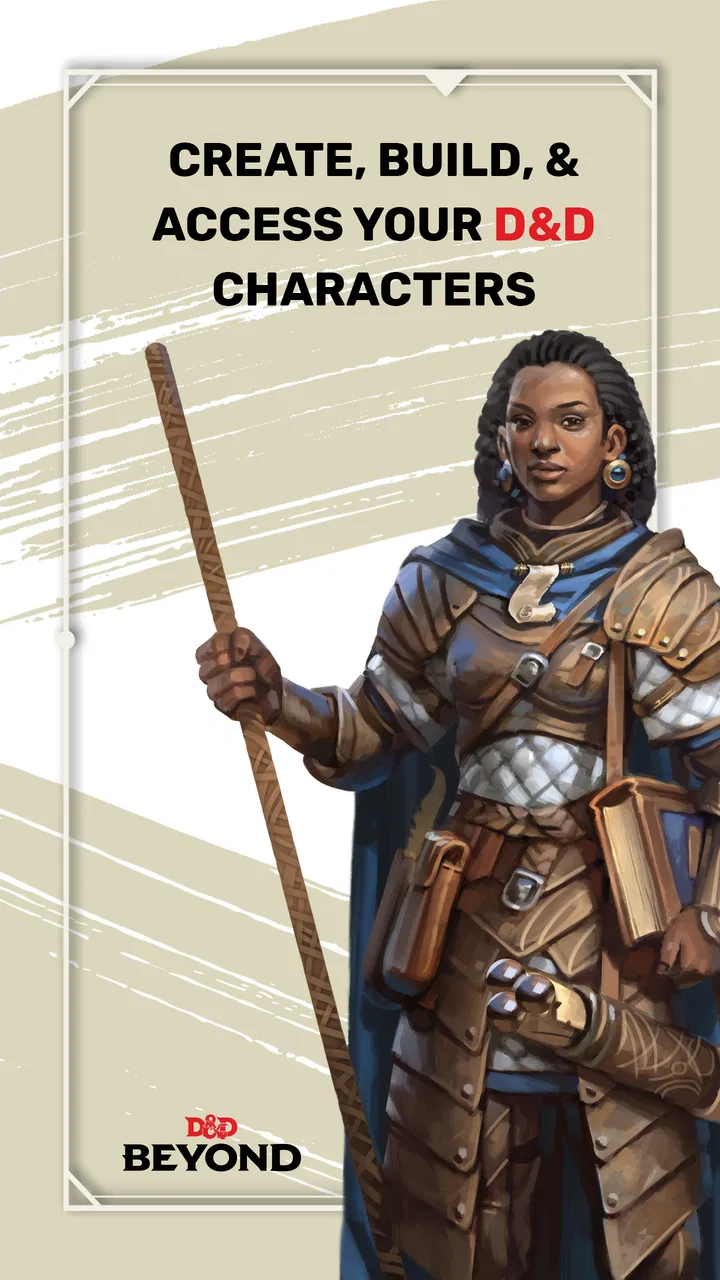
I use D&D Beyond as a practical companion for Dungeons & Dragons rather than as a replacement for the game itself. It is an entertainment app from Wizards of the Coast LLC that brings a Fifth Edition character sheet, dice rolling, spells, and book content into one mobile space. That combination matters most when I am already at the table and do not want to switch between paper notes, a browser, a dice tray, and several reference books.
The app is free to install and is rated for Everyone 10+. It has built a sizeable audience, with a 4.6 average from around 121 thousand ratings and more than a million installs. Those figures suggest a mature product with plenty of regular users, but they do not remove the need to consider how its layout, text-heavy references, and account-dependent workflow fit your own way of playing.
How D&D Beyond feels to use in real play
I find D&D Beyond most useful when I treat its character sheet as a working dashboard, not just a digital copy of paper. In this section, I’ll focus on how having character details gathered in one place changes the pace of play, including the small preparation choices that make it easier to use without interrupting the table.
You May Also Like

 Google Keep - Notes and lists
Google Keep’s Quiet Growth Shows the Appeal of Simpler Notes
As mobile work gets busier, Google Keep keeps winning a simple contest: capture a thought quickly, find it later, and get on with the day.

 Blood Strike: 2.5 Anniversary
Blood Strike’s Loadouts Turn Every Drop Into a Tactical Gamble
A close look at Blood Strike’s custom loadouts: how fast access to signature weapons reshapes its battle royale rhythm, rewards preparation, and narrows the gap between fights.

 Pandora - Music & Podcasts
Pandora’s Music Is Easy to Start, but Harder to Recover
Pandora’s strength is its low-effort path from a seed to a station. Its weak spot is how much confidence it asks you to place in connection, setup, and quiet recovery.

 8 Ball Pool
 Is Built on Rivalries, Rematches, and Routine
A close look at the rivalries, rematches, shared routines, and unanswered safety questions that turn a quick pool match into a persistent mobile community.

 Samsung Music
’s Quiet Strength Is Playing What You Already Own
Its reach comes less from spectacle than from dependable access to a personal library. That simplicity is both the app’s strongest retention engine and its ceiling.

 AccuWeather: Weather Radar
AccuWeather Review: A Quick, Clear Forecast for Everyday Decisions
For everyday plans, the best forecast is the one you can understand quickly. AccuWeather makes rain timing, radar, and local conditions easy to act on, with a few trade-offs.
More From Our News Desk



Readable information is its biggest practical strength
The character sheet is the part I return to most often. Instead of keeping ability scores, modifiers, proficiencies, hit points, equipment, and spell information on separate pieces of paper, I can move through the character in one organized place. That reduces the mental load of remembering where a particular value was written, especially during a busy combat round.
I also find the structure more useful than a simple digital copy of a paper sheet. When I need to check a spell or a character detail, the relevant information is grouped around the character rather than scattered across unrelated notes. For a new player, that can make the first few sessions less intimidating. There is still a lot to learn, but the app gives the rules a more approachable home.
Text-heavy content brings a trade-off. Dungeons & Dragons references contain long descriptions, conditions, classes, abilities, and exceptions. On a small phone screen, reading several paragraphs while other players wait is not always comfortable. I can navigate to the right material, but I still have to concentrate on dense wording. Someone who prefers large print, high contrast, or a tablet-sized view may find a bigger screen more pleasant than a phone.
Navigation makes the most sense once I understand the relationship between the character sheet and the reference material. At first, I may spend time learning where a spell detail lives or how to move from a character feature to its explanation. That initial adjustment is normal for a tool with this much information, but it is worth knowing before a first session. I would explore the character away from the table rather than trying to learn every section during combat.
A useful habit is to prepare the character before the game begins. I check the actions I expect to use, review frequently needed spells, and make sure the values I rely on are easy to find. This turns the app from a searchable rule library into a faster personal dashboard. It also helps players who need extra time to process text, because the most relevant choices have already been identified.
Dice rolling helps, but it changes the table experience
The built-in dice roller is convenient when I am playing somewhere without physical dice or when I want the result recorded directly alongside a digital workflow. It also removes one small source of friction for beginners: nobody has to remember which die is which before making a basic roll.
Still, I do not think it replaces physical dice for every group. Rolling real dice has a social and sensory quality that many players enjoy, and some tables prefer to see the result happen in front of everyone. The digital roller is more valuable when portability, quiet play, or limited table space matters. If your group treats dice as part of the atmosphere, the app works better as a backup than as the center of the session.
For players with limited dexterity, avoiding repeated physical dice handling can be a meaningful advantage. A tap-based roll may be easier than picking up, shaking, and locating several small dice. On the other hand, touch controls still require accurate taps and visual confirmation. I would test the roller during a calm moment before relying on it in a fast encounter, particularly if accidental touches or difficulty targeting small controls are concerns.
Spells and books are useful when preparation is deliberate
The spell reference is one of the strongest reasons to keep the app available. During play, I can check what an effect does instead of asking the group to pause while someone searches through a book. That is especially helpful for characters whose options change regularly or whose abilities depend on detailed wording.
There is an important difference between having reference material available and knowing exactly what a character can use. The app can organize information, but it cannot make every rules interaction obvious. I still need to understand concentration, range, duration, components, and the circumstances that limit an ability. A quick reference is not the same as a substitute for learning the character.
My best workflow is to use the app in two stages. Before the session, I read the abilities I am likely to choose and make a short mental list of common actions. During play, I use the app to confirm details rather than discover everything from scratch. This reduces scrolling and keeps the group moving. It is a small change, but it makes the difference between a helpful reference and a distraction.
Different abilities benefit in different ways
For a player who finds handwriting tiring, a digital sheet can remove the need to erase hit points, rewrite totals, or keep several pages aligned. That is a real everyday benefit. The app also suits players who lose track of paper notes or who move between different play spaces and want their character information in one familiar place.
For someone with dyslexia or another reading-related difficulty, the result may be mixed. Organized information can reduce searching, but the underlying rules remain vocabulary-heavy and full of similar terms. I would pair the app with personal shortcuts: note the two or three actions used most often, keep a simple explanation nearby, and ask the Dungeon Master whether verbal clarification is acceptable. The app supports access to information, but it does not automatically simplify the language.
Players with visual sensitivities should judge the mobile presentation on their own device. Long passages, compact interface areas, and frequent movement between screens may become tiring. A larger display can help, and preparing common references in advance can reduce the amount of searching. I would not assume that a digital format is automatically easier to see than a printed character sheet.
For players who are hard of hearing, the app itself is not the whole solution because a tabletop session depends heavily on spoken conversation. D&D Beyond can keep character details available, but it cannot replace clear turn-taking, written summaries, or an inclusive group habit of repeating important information. In that situation, the Dungeon Master and the other players remain just as important as the software.
Situational access is where the app earns its place
I find the app most valuable in ordinary situations where the perfect gaming setup is unavailable. Imagine joining a session at a friend’s kitchen table after traveling there with only a phone. A paper sheet may be folded in a bag, the group may not have spare dice, and the rulebook may be in another room. Having the character, a roller, and reference material together means I can participate without rebuilding my setup.
It also works well for short sessions or casual play. If I have a limited amount of time, I do not need to unpack a full collection of books and accessories. I can check the character, make a few rolls, and put the phone away. That convenience is less important for a long campaign with a dedicated game room, but it is valuable for players who play in changing locations.
Another useful scenario is a crowded table. Paper sheets can become difficult to read when books, snacks, miniatures, and dice are competing for space. A phone takes up less room, and a player who already knows the interface can find a value without spreading documents across the table. The compromise is that looking down at a screen can make it easier to miss conversation, so I try to use it briefly and return my attention to the group.
For remote or hybrid play, the app can serve as a personal reference while the actual conversation happens elsewhere. I would not treat it as a complete virtual tabletop. Its value is keeping my own character information close at hand, not replacing every tool a remote group may use for maps, voice, video, or shared notes.
The current version is 2.85, and the app supports devices running at least OS 8.1. That makes it available to many older compatible devices, but practical comfort depends on more than the minimum operating system. A smaller or slower phone may make text navigation less pleasant, especially when I am switching quickly between character details and reference pages.
Where the experience becomes less inclusive
The first barrier is cognitive overload. Dungeons & Dragons itself has many rules, and placing more of them inside one app can feel like adding another layer to learn. A beginner may open the character sheet expecting a simple list of actions and instead encounter unfamiliar terms, nested details, and choices that make sense only after understanding the game. I recommend learning the basic table routine first and using the app as support, not as the sole teacher.
The second barrier is screen dependence. A phone can run out of battery, become distracting, or be difficult to use in bright light. It can also create an awkward social moment if the group cannot tell whether I am checking a spell or reading a message. Physical sheets are less elegant, but they are immediately visible and do not require a device. For important campaigns, I keep a basic backup of essential character information even when the app is my main tool.
Purchases are another consideration. The app itself is free, while in-app items range from $1.99 to $54.99 each. I would begin with the free experience and decide whether additional content genuinely improves my own campaign before spending money. A player who only needs a basic character reference may not benefit from buying more material, while someone who wants a broader digital library may value the convenience.
That model can also affect group expectations. If one player has access to material that another does not, the table should be clear about which books and options are being used. The app can make content easy to find, but it does not decide what a particular Dungeon Master allows. I always check campaign rules before building around a feature, spell, or option I have found in the reference material.
There is also a privacy-of-attention issue that is easy to overlook. A paper sheet keeps the game on the table; a phone contains many unrelated distractions. Notifications, messages, and the temptation to switch apps can interrupt concentration. I get the best results when I silence distractions before play and treat the phone as a focused gaming tool rather than a general device sitting beside the dice.
How it compares with paper sheets and physical books
Paper remains better for quick annotation, visual customization, and a glance that does not require opening a screen. It is also easier for a group to understand at a glance. If I enjoy drawing reminders, writing tactical notes, or physically marking changes, paper feels more flexible. A printed sheet is also a dependable fallback when technology is inconvenient.
D&D Beyond is better at keeping information together and reducing repeated copying. Changing a value digitally is less messy than erasing a paper total, and checking a spell is faster than searching several pages once I know where to look. The advantage grows for players who travel, change characters, or dislike maintaining multiple sheets.
Compared with a general note-taking app, this app is more closely shaped around Dungeons & Dragons character information and reference needs. A notes app may be easier for free-form campaign journals, house rules, or personal reminders, but it usually requires more manual organization. I prefer notes for story details and the dedicated app for the structured character information that I need during play.
Compared with a physical rulebook, the digital approach is lighter and faster for targeted searches, while the book is often easier for relaxed reading and page-based orientation. I would choose the app for a quick table lookup and the book when I want to study a larger rules section without a small screen. Neither format wins every situation.
Who should use it, and who may prefer something else?
I recommend it to players who want a portable Fifth Edition character sheet, regularly check spells, dislike carrying several books, or need a quieter alternative to physical dice. It is particularly useful for people who play in different locations and for groups that welcome a digital reference at the table.
I would be more cautious if you strongly prefer paper, avoid screens during social activities, or need highly customized layouts. A player who relies on very large text, unusual contrast settings, or extensive handwritten reminders should try the app on the intended device before making it the only character record. The same applies to anyone who finds dense rules text tiring.
It may also be the wrong choice for a group that bans phones at the table or wants every rulebook and character detail physically present. In that environment, a paper sheet and shared books will create less friction. The app is not automatically an improvement simply because it is digital; its value depends on whether the group’s habits support it.
My inclusive verdict after using it as a table companion
The strongest accessibility benefit is reduced handling and searching, not automatic simplicity. D&D Beyond can make character management easier for players who struggle with handwriting, paper organization, carrying equipment, or repeated dice handling. It can also help a player prepare information in advance and participate from spaces where a full tabletop setup is not practical.
At the same time, the app inherits the challenges of a complex role-playing system: dense language, many choices, small-screen reading, and dependence on a functioning device. It supports different contexts, but it cannot solve every barrier on its own. Clear table communication, patient pacing, personal notes, and a backup plan still matter.
My overall impression is positive. Wizards of the Coast LLC has made a useful home for the parts of Fifth Edition I consult most often, and the free entry point makes it easy to test without committing immediately. The app has been available since July 6, 2020, and its current version is 2.85, so I see it as an established companion rather than a novelty. I would install it for a campaign, prepare my common actions before the first session, silence unrelated notifications, and keep a simple backup of essential details. Used that way, it makes the game more manageable without taking away the human conversation that makes tabletop play worth joining.
FAQs for D&D Beyond
01What is D&D Beyond and how does it enhance the Dungeons & Dragons experience?
D&D Beyond is a digital toolset and game companion for Dungeons & Dragons 5th Edition. It offers a comprehensive suite of features, including a digital rulebook, character builder, and encounter manager. These tools help streamline gameplay, making it easier for both new and experienced players to manage their campaigns and characters.
02Is D&D Beyond free to use, or are there paid features?
D&D Beyond offers a mix of free and paid features. Basic rules and character creation are available for free, but users can purchase additional content like sourcebooks and adventure modules. Subscription options unlock further features like campaign management and access to a wider range of tools, enhancing the overall experience.
03Can I use D&D Beyond offline, or is an internet connection required?
D&D Beyond primarily requires an internet connection for most of its features, as it’s a web-based platform. However, downloaded content such as PDFs or specific digital books can be accessed offline. For a full experience, especially with interactive tools, a stable internet connection is recommended.
04How does D&D Beyond integrate with physical D&D products?
D&D Beyond complements physical D&D products by providing digital access to content that users purchase. This digital library allows for easy reference and quick searching during gameplay. However, it does not replace physical books, and users must purchase digital versions separately unless they have codes from physical editions.
05Is D&D Beyond suitable for beginners new to Dungeons & Dragons?
Yes, D&D Beyond is very beginner-friendly. It simplifies the character creation process and provides a wealth of resources and guides. The platform offers a structured way to learn the game, making it easier for new players to understand rules and mechanics, thereby reducing the intimidation factor often associated with starting D&D.
Pros
- Intuitive interface enhances user experience.
- Extensive library of official D&D content.
- Customizable character creation tools.
- Syncs across devices for seamless play.
- Regular updates with new content.
Cons
- Requires subscription for full features.
- Occasional bugs in character sheets.
- Some features need internet access.
- Limited free content available.
- Can be overwhelming for new users.

D&D Beyond
Gallery